
Home›Tour packages›Delhi to Jaipur

JAIPUR · RAJASTHAN · PRIVATE CAB TOUR

Delhi to Jaipur Tour Package

A short royal-city break works best when the drive and sightseeing are paced together. This sample leaves Delhi in the morning, gives Jaipur one full day, and keeps the final morning flexible before the return drive.

⌁  3 days · 2 nights◉  Private cab · flexible stops
Plan this trip ↓
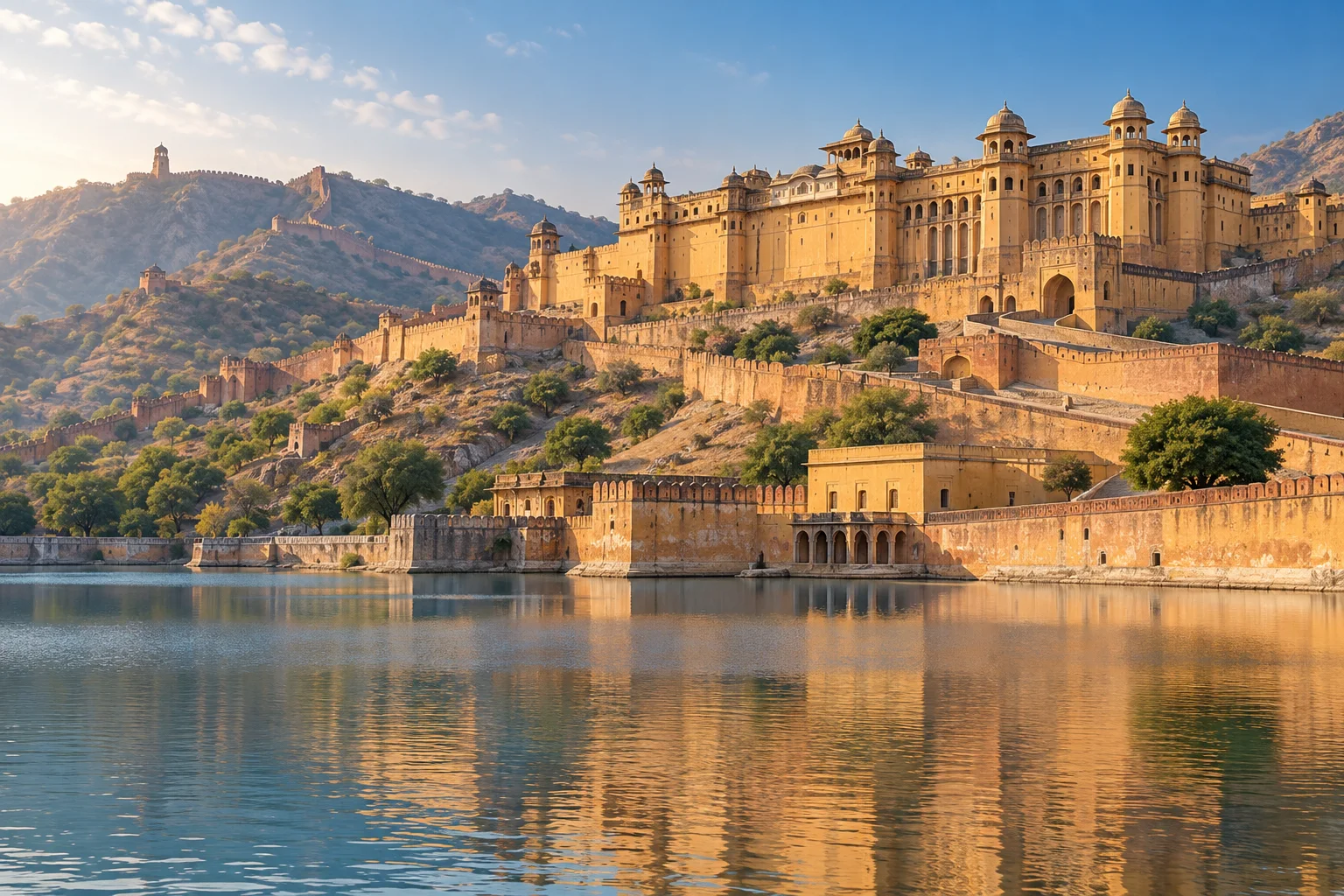
Amber Fort rising above the hills of Jaipur
BOOK YOUR DELHI TO JAIPUR RIDE

Where should we pick you up?

Enter your trip details to review the available ride estimate.

⌁ No login required
Journey type
Review the estimate, then send your ride request on WhatsApp.

Type a location and choose a Google Maps suggestion, or use the map button to select your pickup point.

A TRIP THAT FITS YOUR PACE

What this journey is built around

Best for first-time visitors who want the main forts and old-city landmarks in one compact break. A fourth day makes the palace and market visits feel less compressed.

  • Amber Fort and the old capital at Amer
  • City Palace and Jantar Mantar in the walled city
  • Hawa Mahal façade and nearby bazaars
  • Optional evening at Chokhi Dhani or a local food stop

DAY BY DAY

A practical sample itinerary

Stops are a starting point. Final timing depends on pickup/drop address, opening hours, traffic and your travel dates.

01
Day 1

Delhi to Jaipur

Start from your Delhi pickup point and drive to Jaipur. After check-in, keep the first evening light: a walk around the old city, a rooftop view near Hawa Mahal, or an optional cultural evening at Chokhi Dhani. The evening show and dinner are separate choices.

02
Day 2

Forts, courtyards and the Pink City

Set aside the morning for Amber Fort, then pause for the Jal Mahal viewpoint. Continue to City Palace and Jantar Mantar, with Hawa Mahal as a photo stop. Choose one or two bazaars—Johari Bazaar for jewellery, Bapu Bazaar for textiles—rather than trying to cover every market in one rush.

03
Day 3

One last stop, then Delhi

Use the morning for Albert Hall Museum or Galtaji if opening times and your pace allow. Begin the road journey back after an early lunch. Return time depends on traffic, breaks and your final drop location.

CITY HISTORY · JAIPUR

Why Jaipur feels different from other old cities

Jaipur was not simply a settlement that grew in every direction over centuries. Sawai Jai Singh II founded it in 1727 as a planned capital on the plains, with broad streets, a grid-like layout and markets built into the city’s structure. That plan still shapes how a visitor experiences the Pink City: the bazaars are part of the city’s architecture, not an add-on at the end of a sightseeing list.

Read more: UNESCO: Jaipur City ↗
01

A capital designed for trade

The walled city brought royal spaces, neighbourhoods, temples and commercial streets into one deliberate plan. The main avenues were designed as markets, helping Jaipur grow as a centre for trade and craft.

02

Chaupars and city blocks

Large public squares called chaupars sit at key street intersections. As you move through the old city, notice the repeated facades and the way the streets open into these shared spaces.

03

A living historic centre

UNESCO recognises Jaipur’s walled city for its urban planning and architecture. Shops and workshops still occupy historic market streets, so daily commerce remains part of the heritage landscape.

FORTS · PALACES · ASTRONOMY

Read Jaipur’s landmarks as one connected story

Jaipur sightseeing makes more sense when you see how the former hill capital, royal administration and scientific ambition fit together. Amer lies outside the modern city centre; the palace and observatory sit in the historic core. Grouping these visits by location saves time and leaves more attention for the places themselves.

Read more: Rajasthan Tourism: Jaipur guide ↗
01

Amer: the earlier hill capital

Amber Fort sits about 11 km from Jaipur’s main city. Its courtyards, audience spaces and palace rooms show the scale of the Kachwaha court before the capital shifted to the plains.

02

City Palace and Jantar Mantar

The royal complex and the astronomical observatory are neighbours in the walled city. Jantar Mantar’s large instruments were built to observe celestial positions and time; give the open-air site time rather than treating it as a quick photo stop.

03

Hawa Mahal and the bazaar streets

Hawa Mahal is best understood as part of the old-city streetscape. Pair its façade with a nearby walk through the market lanes instead of scheduling it as a distant, standalone drive.

CRAFT · MARKETS · LOCAL CHARACTER

What to look for beyond the monuments

Jaipur’s craft traditions are easier to appreciate when you know what you are seeing. The city and nearby Sanganer and Bagru are associated with hand printing; blue pottery has a distinct quartz-based composition. A craft stop can turn shopping into a short lesson in material, pattern and process.

Read more: Rajasthan Tourism: crafts and shopping ↗
01

Block-printed textiles

Look for repeating hand-stamped patterns and ask whether a print is from Sanganer or Bagru. Jaipur’s Anokhi Museum of Hand Printing in Amer offers context through textiles, tools and the printing process.

02

Blue pottery

Rajasthan Tourism describes Jaipur blue pottery as a quartz-based craft rather than ordinary clay pottery. Its blue and turquoise glazes and painted motifs make it one of the city’s most recognisable souvenirs.

03

A market walk with a purpose

Johari Bazaar is associated with jewellery; Bapu Bazaar and the old-city lanes offer textiles, footwear and everyday shopping. Choose one area, compare workmanship, and leave time to walk rather than trying to cover every bazaar by car.

HOW TO PLAN THREE DAYS

A Jaipur itinerary that respects distance and energy

The familiar Jaipur route—Amer Fort, Jal Mahal, City Palace, Jantar Mantar and Hawa Mahal—can become a tiring checklist if every stop is treated as a separate car ride. Keep the hill-side excursion together, then explore the compact walled-city sights on foot where practical.

Read more: Rajasthan Tourism: suggested itineraries ↗
01

Day one: arrive and settle

Delhi to Jaipur is a substantial road leg. Check in first, then choose a nearby evening activity such as a short old-city walk or dinner. Chokhi Dhani is an optional separate outing, not a monument stop in the centre.

02

Day two: Amer and the old city

Start with Amer Fort and the Jal Mahal viewpoint, then return to the walled city for City Palace and Jantar Mantar. Opening hours and queues affect the order, so keep Hawa Mahal as a flexible nearby stop.

03

Day three: one interest-led visit

Use the last morning for Albert Hall, Galtaji, a craft museum or another market visit—choose one that suits your group. Start the return drive with enough buffer for traffic and your final drop.

PLACES TO KNOW

Stops worth planning ahead

Amber Fort

Fort courtyards, hilltop views and the Sheesh Mahal are the main draw. Allow time for the uphill approach and ticket queues.

Official visitor information ↗

BEFORE YOU REQUEST A QUOTE

Plan the right version of this trip

This page is a sample private-cab itinerary. Share your group size, dates, preferred vehicle, hotel plan and extra stops so the team can confirm availability and provide a written quote.

Your quote depends on travel dates, group size, vehicle and chosen stops. Ask the booking team to list any additional expenses clearly.

Ready to plan Delhi to Jaipur?

Send your travel dates and group details. The booking team will confirm availability and what is included.

Request a custom quote ↗Or call +91 98711 21217
☎ CallBook a ride ↗